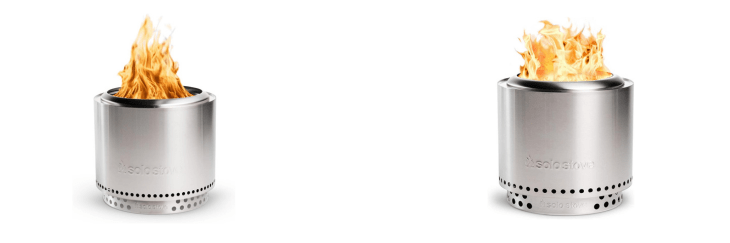
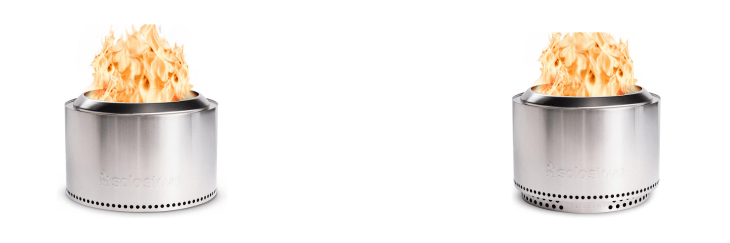
Solo Stove Yukon 1.0 vs 2.0 – Check Which One Is Best & Why?
Solo Stove Yukon 2.0 & Solo Stove Yukon 1.0 share many similarities, but there are also important differences, such as quality, performance, features, design, and connectivity. If you want the best one between them, I Would recommend the Solo Stove Yukon 2.0 rather than the Solo Stove Yukon 1.0.
Why Do I Recommend The Solo Stove Yukon 2.0?
- The Solo Stove Yukon 2.0 features a removable ash pan for fast and mess-free cleanup after each burn, whereas the Solo Stove Yukon 1.0 uses a fixed base.
- Solo Stove Yukon 2.0 comes with a removable base plate to allow direct access to the ash pan for easier maintenance, while the Solo Stove Yukon 1.0 has a non-removable base.
- It includes an enclosed ash containment system to keep soot and debris neatly contained during and after burning, whereas the Solo Stove Yukon 1.0 uses an open base cavity.
- The Solo Stove Yukon 2.0 has slightly improved weight distribution for easier repositioning and transport despite its added components, while the Solo Stove Yukon 1.0 has a lighter but less balanced structure.
- Solo Stove Yukon 2.0 features upgraded color and finish options for better outdoor aesthetics and personalization, whereas the Solo Stove Yukon 1.0 was primarily available in basic stainless or elemental tones.
- It supports easier long-term maintenance since its removable ash components can be washed or replaced, while the Solo Stove Yukon 1.0 requires manual scraping and deep cleaning inside the burn chamber.
- The Solo Stove Yukon 2.0 comes with clearer SKU labeling and version identification for straightforward accessory pairing and replacements, whereas the Solo Stove Yukon 1.0 lacks visible model differentiation.
- Solo Stove Yukon 2.0 is built as part of the newer generation with improved usability and user-centered design, compared to the Solo Stove Yukon 1.0 which retains the older configuration.
Maybe the Solo Stove Yukon 1.0 can make you comfortable because it’s a little bit cheaper than the Solo Stove Yukon 2.0. But you have to compromise all the above-mentioned features. Now the Decision is Yours. I hope it was helpful to choose the right one.
Side By Side Comparison
| Feature | Solo Stove Yukon 2.0 | Solo Stove Yukon 1.0 |
| Ash management system | Removable ash pan | No removable ash pan |
| Base plate | Removable base plate | Fixed base plate |
| Cleanout access | Lift-out ash pan access | Top-only access |
| Cleanout method | Lift plate → pull pan | Tip/scoop/vacuum |
| Ash containment | Enclosed ash pan | Open fire-pan cavity |
| Cleanout steps | 2-step cleanout | Multi-step cleanout |
| Vacuum reliance | Optional | Common |
| Included parts (ash) | Ash pan + removable base | No ash pan; fixed base |
| Weight | ~41.6 lb | ~38 lb |
| Packaging callouts | “2.0” ash system | Legacy build |
| Color variants | More colorway options | Fewer colorway options |
| Price trend (street) | Typically higher | Typically lower |
| SKU labeling | “2.0” designation on unit/box | No “2.0” designation |
| User maintenance frequency | Reduced ash hassle | More frequent ash handling |
| Price | Check Solo Stove Yukon 2.0 Price | Check Solo Stove Yukon 1.0 Price |
What Common Both Can Do?
- Material: Both Solo Stove Yukon 2.0 and Yukon 1.0 are built from 304 stainless steel, ensuring durability, corrosion resistance, and the ability to withstand high temperatures for outdoor fire use.
- Double-Wall Design: Each model uses a double-wall construction that enhances heat retention and supports the signature secondary burn for cleaner, more efficient combustion.
- Airflow Technology: Both designs utilize the same airflow system that channels oxygen efficiently through the bottom vents, promoting hotter, more consistent flames.
- Secondary Combustion: Each version supports secondary combustion, where hot air is pulled through upper vent holes to reignite smoke particles, resulting in a nearly smokeless burn.
- Low-Smoke Burn: Both models minimize smoke output by burning wood more completely, making the experience more pleasant for users sitting around the fire.
- Burn Chamber Size: The internal burn area is identical, allowing similar wood capacity, flame size, and heat distribution across both versions.
- Height: Both versions share the same 19.8-inch height, maintaining a balanced profile that fits most outdoor setups or patios.
- Diameter: Each unit measures 27 inches across, preserving the large burn surface and compatibility with existing Yukon accessories.
- Fuel Type: Both versions are designed to burn natural wood, providing an authentic campfire experience without relying on propane or pellets.
- Portable Design: Despite their size, both are engineered to be portable enough for transport with two people, making them ideal for backyards or camping trips.
- Stand Compatibility: The Yukon Stand accessory works seamlessly with both versions, allowing use on heat-sensitive surfaces like decks or grass.
- Fire Ring: Both models include a top fire ring that directs flames inward for better combustion and reduces smoke escape from the rim.
- High Heat Output: Each Yukon delivers intense radiant heat due to the wide combustion chamber and efficient airflow, ideal for large outdoor gatherings.
- Accessory Fit: Lids, shields, cooking accessories, and covers from the Yukon lineup fit both versions, ensuring continuity for owners upgrading to 2.0.
- Outdoor Use: Both stoves are designed exclusively for outdoor environments, offering safe, open-air fire enjoyment with minimal maintenance.
- Rust Resistance: Thanks to the stainless steel construction, both are highly resistant to rust and weather wear, maintaining long-term appearance and performance.
- Airflow Holes: Each design features bottom and upper vent holes that circulate oxygen to feed the fire, key to achieving smokeless efficiency.
- Signature Flame Pattern: Both produce the signature Solo Stove swirling flame effect, creating an aesthetic and efficient fire with minimal smoke.
Common Features
| Feature | Solo Stove Yukon 2.0 | Solo Stove Yukon 1.0 |
| Material | 304 Stainless Steel | 304 Stainless Steel |
| Double-Wall Design | Yes | Yes |
| Airflow Technology | Yes | Yes |
| Secondary Combustion | Yes | Yes |
| Low-Smoke Burn | Yes | Yes |
| Burn Chamber Size | Same diameter | Same diameter |
| Height | 19.8 in | 19.8 in |
| Diameter | 27 in | 27 in |
| Fuel Type | Wood | Wood |
| Portable Design | Yes | Yes |
| Stand Compatibility | Yes | Yes |
| Fire Ring | Yes | Yes |
| High Heat Output | Yes | Yes |
| Accessory Fit | Compatible | Compatible |
| Outdoor Use | Yes | Yes |
| Rust Resistance | Yes | Yes |
| Airflow Holes | Bottom and upper vents | Bottom and upper vents |
| Signature Flame Pattern | Yes | Yes |
| Price | Check Solo Stove Yukon 2.0 Price | Check Solo Stove Yukon 1.0 Price |